Mushroom Extract Vs Powder: What’s the Difference?
Chase SlappeyThe mushroom extract vs powder decision comes down to a single processing step, and most labels never explain it.
Mushroom powder is whole dried mushrooms milled fine, so it keeps the full food matrix: fiber, protein, minerals, and a small share of beta-glucans. Mushroom extract is the same powder cooked in hot water, alcohol, or both, then dried into a concentrate with far more beta-glucans per gram and far less fiber.
Powder is closer to a food. Extract is closer to a supplement. That one step is also why two jars of the same mushroom can sit on the same shelf at three times the price.
We are Purely Mushroom, and we buy both forms every year. Here is what separates them, and how to tell which one you are actually holding.
Key Takeaways:
- One processing step separates them. Both start as dried, milled mushrooms. Powder stops there. Extract carries on, cooked in hot water, alcohol, or both, then dried into a concentrate.
- Powder keeps everything. Extract keeps one thing. Powder retains the fiber, protein, and minerals of the whole mushroom. Extract concentrates the beta-glucans and leaves most of the rest in the discarded solids.
- Neither form is better. They are built for different jobs. Powder costs less per gram and belongs in broths, sauces, and coffee. Extract fits a measured daily serving, which is why capsules, gummies, and tinctures are built on it.
- The label matters more than the format. Look for the Latin species name, the plant part, the extract ratio, and a tested beta-glucan percentage. A ratio printed without a percentage is a claim you cannot check.
📖 Table of Contents
- Key Takeaways
- What Mushroom Powder Is
- What A Mushroom Extract Is
- Mushroom Powder Vs. Extract Powder at a Glance
- How to read the label
- So Which One Should You Pick?
- Mushroom Extract and Powder - Frequently Asked Questions
- Is It Better To Take Mushroom Powder or Extract?
- Is Lion’s Mane Extract or Powder Better?
- What Is the Best Form of Mushroom Supplement?
- Are Mushroom Extracts Worth It?
Featured in This Article
What Mushroom Powder Is
Mushroom powder is a whole dried mushroom, milled fine. Nothing gets removed, and nothing gets concentrated.

That is its strength. You get the mushroom the way it grew, including dietary fiber, protein, B vitamins, copper, potassium, selenium, and antioxidants like ergothioneine. Whole mushroom powders also keep the flavor, which is why they turn up in broths, seasoning blends, and coffee mixes.
That is also its limit. Because nothing is concentrated, whole mushroom powders usually test in the low single digits for beta-glucan content. Beta-glucans sit inside chitin, the tough cell wall that gives a mushroom its structure. Humans do not make an enzyme that breaks chitin down, so a fair share of what is in the jar passes straight through you.
If a product is priced well below everything else on the shelf, it is almost always powder.
What A Mushroom Extract Is
A mushroom extract is a mushroom powder that has gone through a solvent step.

Hot water extraction is the most common. The milled mushroom is decocted for several hours, the liquid is separated from the solids, and what is left is evaporated or spray-dried back into a powder. That step opens the chitin and pulls the water-soluble compounds, mostly beta-glucans and other polysaccharides, into a much smaller volume.
Alcohol extraction does a different job. It pulls triterpenes, which are not water-soluble and are associated with species like Reishi and Chaga. Dual extraction runs both steps and blends the results, which is why dual-extracted Reishi usually costs more than the hot-water version.
Mushroom extract powders concentrate one part of the mushroom and leave the rest behind. Most of the fiber, and much of the vitamin and mineral content, stays in the solids that get discarded. In exchange, a hot-water extract commonly reports a beta-glucan percentage many times higher than the raw material it came from.
Mushroom Powder Vs. Extract Powder at a Glance
Here is the whole comparison in one view.
|
Whole mushroom powder |
Mushroom extract powder |
|
|---|---|---|
|
Made by |
Drying and milling |
Drying, milling, then hot water or alcohol extraction |
|
What is kept |
The whole mushroom |
Selected compounds, concentrated |
|
Fiber and minerals |
Retained |
Mostly removed |
|
Beta-glucan level |
Typically low single digits |
Substantially higher |
|
Typical serving |
1 to 2 tablespoons |
Around 1 teaspoon or less |
|
Cost per gram |
Lower |
Higher |
|
Common uses |
Cooking, broths, and everyday food |
Capsules, gummies, tinctures |
|
Label to check for |
Species, plant part |
Species, plant part, extract ratio, beta-glucan % |
Featured in This Article
How to read the label
Five things on the label tell you what you are actually buying. This is where mushroom powder vs. extract powder stops being theory.
-
The Latin name, “Lion’s Mane” is a nickname. Hericium erinaceus is a species. Most mushroom powders on a crowded shelf list only the nickname, and that tells you nothing about what was grown.
-
The plant part: The fruiting body is the mushroom itself. Mycelium is the root-like network underneath it. Mycelium grown on grain is often milled together with the leftover grain, which adds starch weight and dilutes everything else in the jar.
-
The extract ratio: A 10:1 extract means ten kilograms of raw material went in, and one kilogram came out. It describes the process, not the result.
-
The beta-glucan percentage: This is the number that verifies the ratio. A ratio printed without a percentage is a claim you have no way to check.
- The carriers: Some extract products are cut with maltodextrin or brown rice flour so they flow better in a factory. That is not automatically a problem, but it should be on the label.
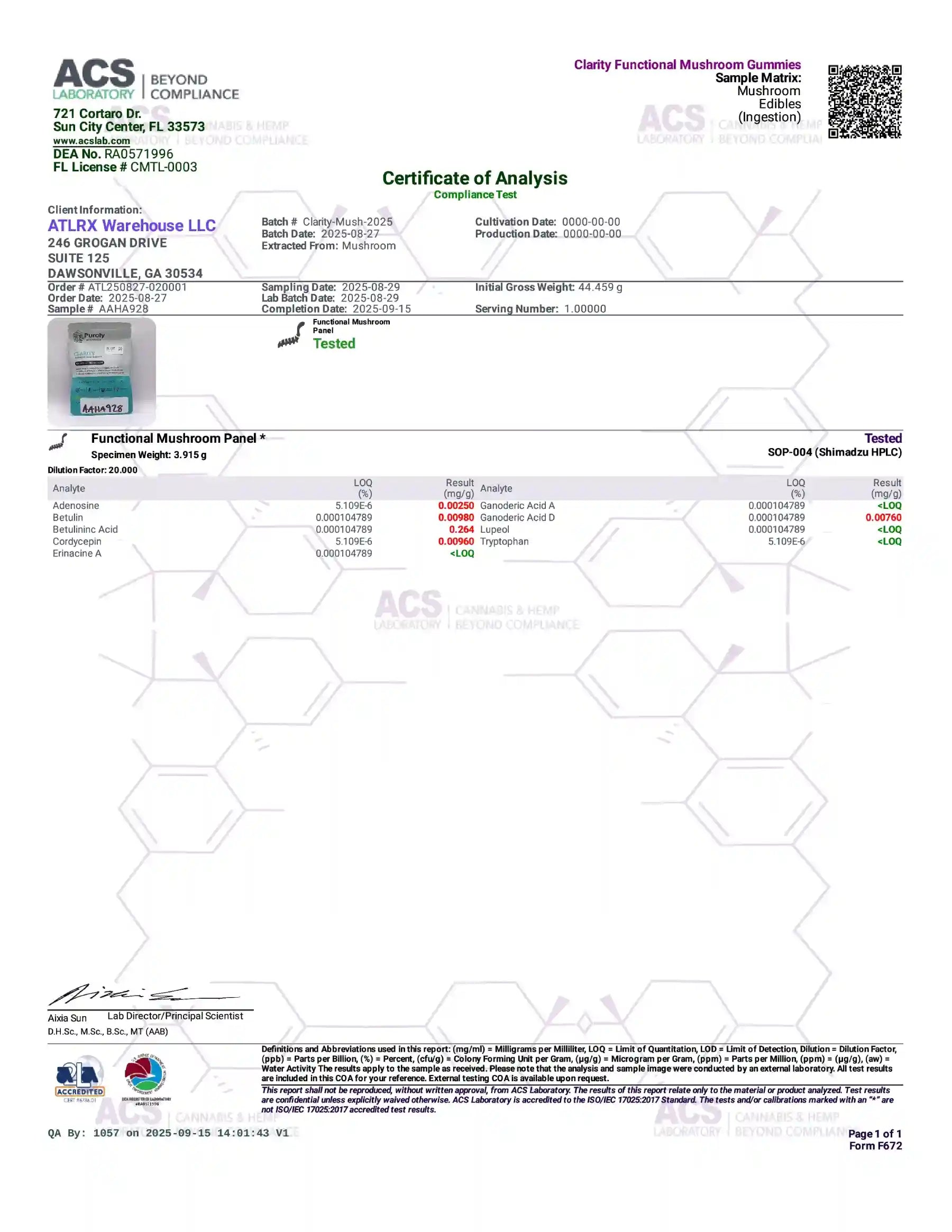
Then ask for a Certificate of Analysis. A brand that tests each batch will hand one over without a fuss.

So Which One Should You Pick?
The mushroom powder vs. extract choice comes down to how you plan to use it, not which one is superior.
If you cook, buy powder. Whole mushroom powders cost less per gram, taste like mushrooms, and are made for the pan. A tablespoon in a broth or a pasta sauce does exactly what you would hope.
If you want a measured daily amount of a specific compound in a small serving, buy an extract. That is why capsules, tinctures, and our own mushroom gummies are built on extracts rather than raw powder. You cannot fit a measurable amount of beta-glucan into two gummies without concentrating it first.
Plenty of people keep both. Powder in the kitchen, extract in the cupboard.
Mushroom Extract and Powder - Frequently Asked Questions
Is It Better To Take Mushroom Powder or Extract?
Neither. Extract gives you more beta-glucan in a smaller serving, which is why capsules and gummies are built on it. Powder keeps the whole mushroom with its fiber and minerals, which is why it belongs in the kitchen. Pick the one that matches how you will use it.
Is Lion’s Mane Extract or Powder Better?
Extract, if you want a measured daily serving. A hot-water Lion’s Mane extract concentrates the beta-glucans into one small scoop. Powder is the better pick if you cook. On Lion’s Mane extract vs powder, your routine decides it, not the mushroom.
What Is the Best Form of Mushroom Supplement?
The one with a Latin species name, a named plant part, and a tested beta-glucan percentage on the label. Format matters less than disclosure. A well-documented powder is a clearer purchase than a vague extract with a big number on the front.
Are Mushroom Extracts Worth It?
Yes, when the label proves the concentration. Look for a beta-glucan figure and a Certificate of Analysis. Without those numbers, mushroom extract vs. powder is just a difference in price. The testing is what you are actually paying for.
Good mushroom powders and good extracts start from the same place: a label that tells you what is in the jar. Ask for that first, and the rest of the decision gets easy.
These statements have not been evaluated by the Food and Drug Administration. This product is not intended to diagnose, treat, cure, or prevent any disease.